



Paediatric physiotherapy supports children with different physical conditions. It looks at how a child moves and works with their body in different ways. Many children visit physiotherapists for various reasons. Each child is seen as an individual during care. Pediatric physiotherapy Dubai sessions are designed in a way that suits their age and ability.
Tummy time:
Tummy time is often used for babies to build neck and upper body strength. It involves placing the baby on their stomach while awake and supervised. This activity helps with lifting the head, turning, and pushing up with the arms. It may be done several times a day for short periods, even on a soft blanket or play mat.
Sit-to-stand practice:
For toddlers learning to stand or walk, moving from sitting to standing is a key activity. This can be done from a small chair, a low bench, or even a parent’s lap. Repeating this movement builds leg strength and supports balance. A toy held just out of reach is sometimes used to motivate the child to rise.
Reaching and grasping games:
Games that involve reaching for blocks, soft toys, or rings can support shoulder and hand movement. These exercises may be done in sitting or crawling positions. The child stretches toward the item, picks it up, and moves it to another place. This activity supports body control, hand use, and attention.
Obstacle paths:
Simple obstacle paths can be made using cushions, boxes, or stepping stones. Children walk, step, or crawl through the path, which supports balance and motor planning. A therapist may change the path during the session to match the child’s ability or keep their interest.
Ball activities:
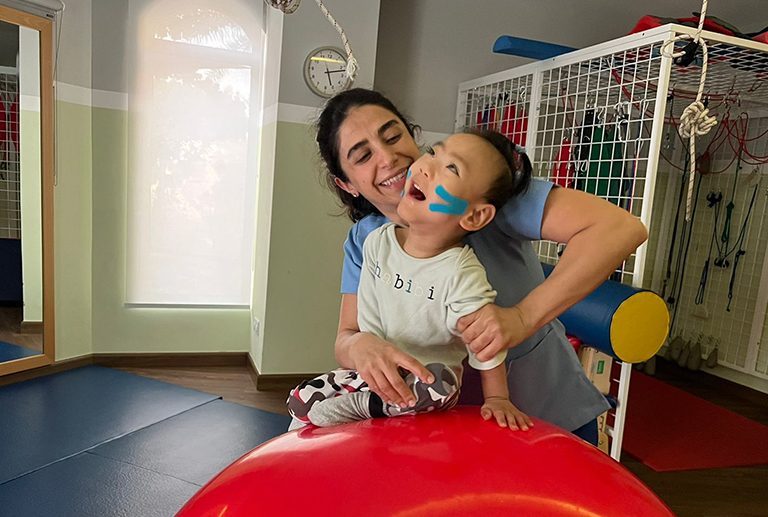
Rolling, catching, or kicking a ball is often part of sessions for younger and older children. These movements support coordination and body awareness. Larger therapy balls may also be used for stretching or rocking exercises, especially for balance or trunk strength.
Wall push-ups:
Standing close to a wall and pressing the hands against it is a simple way to build upper body strength. This is used with older children who want arm and shoulder support. The movement is repeated a few times during the session.